Friday, May 11, 2012
Dave Ulrich's comments
From: Dave Ulrich
To: omer wahab
Sent: Wednesday, 21 March 2012, 16:11
Subject: RE: HI from Sudan
javascript:void(0);
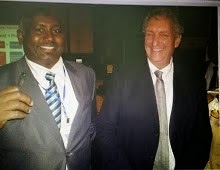
It was a delight to meet you in Sudan.
I hope to be helpful in your research.
I made some edits on your letter.
I also read your overview. May I ask a few pointed questions:
1. State the “phenomenon” you are interested … can you give a specific example of what you are going to test. This example (or phenomenon) offers a clear understanding of the issue your research will address.
2. Lay out clearly the logic you are studying:
a. What are the outcome (dependent) variables you are interested in
b. What are the independent variables
c. What are the relationships you propose
3. Your effort to separate the terms core competence, RBV, capability, intangibles is very helpful. it would be good to lay them out very clearly.
What do you have in mind for your sample? How will you measure some of the terms?
These are my responses.
Dave

Tuesday, May 8, 2012
My debate with Dave Ulrich on the HR transformation
Dear professor Dave
In fact I was the luckiest one in Sudan who attended your valuable delivered speech about leadership Code and HR transformation. Actually, it was very fascinating professional knowledge transferred to us. It was in a simple and so useful manner. Also, I would like to thank you very much, indeed, for your encouraging and appreciating words. I did covey these words to my PhD supervisor Professor Abu Sin and he was so happy and thanking you very much for the appreciation and encouragement to me.
Again I would like to take the opportunity to send to you a soft copy of my PHD model and I hope that you can go through it. In the meantime, I have a big dream to be my external examiner. But before that it is very interesting to me to have your professional comments and feedback on this model and send it back to me as it will be submitted and enclosed within my PhD documentations. In the same time feel free to use any part of this document if you think that there are some points that can be useful to you. This model is summarizing the ideas which are expressed in your books, HR transformation, HR value proposition and Why the Bottom Line Isn't: How to Build Value through People and Organization. The Model of the research is also supported by the Findings of Professor Abraham Carmeli from Israel, Ina Ehnert from the University of Berlin, Jay B. Barney (RBV), C.K. Prahalad and Norton and Kaplan.
In reviewing the HR transformation I have considered your model's 4 questions about (why),( what), (How) and (who). In my research I try the best leeway to adapt the model to the case study. In fact, the above model tackles very deliberately the outcomes of the HR transformation which about reshaping the organization strategic capabilities through the intangibles. However, Tangible capital stocks that were capability builder for their possessors are now imperatives and threshold competences to just remain in business. Intangible capital stock (intangible competencies) such as HR capital, talent, leadership, cost leadership, transparency, accountability , innovation and customer care appear to be the new keys to a new
nonconventional means of building the business strategic capabilities that add value to the organization key stakeholders and sustain competitive advantage.
Resources competencies and capabilities
Actually, many are confused by the three terms capabilities, resources and competencies and they are using them interchangeably. According to my model resources and competencies have got the same meaning, while capabilities are the outcomes of the best use of the resources and competencies or in other words strategic capabilities are built through the best use of these tangible and intangible resources (RBV).
Tangible resources (tangible Competences) + Intangible resources (intangible competencies) = capabilities
OR
Tangible capital Stock + Intangible capital stock = Capabilities
However, once the organization capabilities are built through the alignment of the tangible and the intangible competences, value can be added to the organization stakeholders so as to sustain the competitive advantage.
The question of sustaining the competitive advantage
We build our argument on sustaining competitive advantage on the works of Jay B. Barney (RBV) and Abraham Carmeli. We argue that tangible capital stocks are no longer organization competitive advantage enabler since all competitors equally possess these tangible competences. However, market position can be sustained through the intangibles resources (competencies), (the VRIO concept of RBV) which are the deliverable of the HR. The role of HR professional is to plan for the organization's overall competencies map. Then, from the map only 10 to 15 targeted competencies can be developed in the core competency pool. At the end only 3 to 5 distinctive competencies are to be selected from the pool to sustain the competitive advantage. Actually, there is no magic list of what competency that can suit. It largely depends on the business activities and the market structure.
However, the role of HR professionals is very strategic in order to make these competencies durable and everlasting. Continuous investment in the sources of each targeted competency (source of the resource) is very essential to underpin sustainability. That means each competency has to be identified, established, built
deployed and protected throughout the pipeline.
Thursday, November 10, 2011
HR transformation Model
Phase 1: Build the business case. (Why do transformation?) HR transformation begins with a clear rationale for why transformation matters. This is in terms of knowing the business context and building a case for change.
Phase 2: Define the outcomes. (What are the outcomes of transformation?) This phase clarifies the expected outcomes from the transformation. What should happen when we invest in HR transformation? Answers to this question defines the outcomes of HR transformation strategically contribute in building the business distinctive capabilities and when these distinctive capabilities add value to the business key stakeholders and the combination of the two strategic deliverables will result improving the business performance by attaining and sustaining the business competitive advantage through the human resources.
Phase 3: Redesign and reengineering HR into new strategic look. (How do we do HR transformation?) HR transformation requires change in HR strategies around departments, practices, and people. The model will focus on how to change HR departments, people, and practices.
Phase 4: Engage line managers and others. (Who should be part of the HR transformation?) HR transformation requires that many people participate in defining and delivering the transformation. The model focuses on transferring ownership of the HR transformation to line management and on strategies for building HR’s capability to create sustained change
Phase 2: Define the outcomes. (What are the outcomes of transformation?) This phase clarifies the expected outcomes from the transformation. What should happen when we invest in HR transformation? Answers to this question defines the outcomes of HR transformation strategically contribute in building the business distinctive capabilities and when these distinctive capabilities add value to the business key stakeholders and the combination of the two strategic deliverables will result improving the business performance by attaining and sustaining the business competitive advantage through the human resources.
Phase 3: Redesign and reengineering HR into new strategic look. (How do we do HR transformation?) HR transformation requires change in HR strategies around departments, practices, and people. The model will focus on how to change HR departments, people, and practices.
Phase 4: Engage line managers and others. (Who should be part of the HR transformation?) HR transformation requires that many people participate in defining and delivering the transformation. The model focuses on transferring ownership of the HR transformation to line management and on strategies for building HR’s capability to create sustained change
Sunday, September 4, 2011
HR transformation and sustainability of human resources activities
Although the strategic role of HR transformation is to create, design and develop sustainable new HR activities that develop business and employees competencies to facilitate long lasting competencies that enable long lasting business capability that sustain the business competitive advantage. Sustainability in employees and business competencies can be obtain through long term investment in the competencies sources that initiate and create the targeted competency.
These sources of the competencies are activities and polices adopted through the HR transformation program that make the competencies durable and sustainable to support the sustainability of business capabilities in order to under pin sustainable and durable competitive advantage. This new argument which colors the main theme of the research hypothesis has very rare literature review. This new argument was developed by Ina Ehnert (2008:58) when she explains clearly her argument "it is assumed that the sources of resources have to be sustained to facilitate long-term exploitation of important resources. The objective is to sustain a permanent resource flow between organizations and their environments because the dependencies are sought to be so strong that in the long run only a common survival of organizations and their environments seems possible". According to this argument business success or even survival will depend on sustainability of its resources and competences that long lasting than those owned by the business competitors
.
These sources of the competencies are activities and polices adopted through the HR transformation program that make the competencies durable and sustainable to support the sustainability of business capabilities in order to under pin sustainable and durable competitive advantage. This new argument which colors the main theme of the research hypothesis has very rare literature review. This new argument was developed by Ina Ehnert (2008:58) when she explains clearly her argument "it is assumed that the sources of resources have to be sustained to facilitate long-term exploitation of important resources. The objective is to sustain a permanent resource flow between organizations and their environments because the dependencies are sought to be so strong that in the long run only a common survival of organizations and their environments seems possible". According to this argument business success or even survival will depend on sustainability of its resources and competences that long lasting than those owned by the business competitors
.
HR role in building the business capabilities
The question of HR transformation role in building the business capabilities is going to be achieved through building the HR competency model. The HR role in building the business capabilities are addressed by to Dave Ulrich et al (2009:49) "In focusing on capabilities as outcomes, the HR transformation team should do a capability audit where they identify which capabilities are most critical to their organization’s future success given business conditions and business strategy". The same concept of capabilities underpinning and development is also supported by Garry Johnson et al (2005:116) . The authors argue that when conducting business strategy, strategy team should analyze and investigate all the business internal capabilities and match them with the external environment in order to reach the strategy fit. Moreover, we conclude that when the business needs to develop new HR strategy or conduct HR transformation one of the prime outcomes to this change is to reinvent and rebuild its strategic capabilities to match with external environment. HR transformation specialists have to breakdown each targeted capability to its supporting competences as business capabilities stem from the business and employees competencies when combined together to give the business its distinguished targeted capabilities. Accordingly, the role of HR transformation in building the business capabilities will concentrate on how the competency is created and developed in the business. The strategic role of HR is how to build the employee and the business competences by developing and building the Core Competency Pool 'CCP'. The CCP is reservoir which combines all the competencies that are required in building the business present and future strategic capability. From within the core competency pool HR and business leaders has to select, develop and nurture distinctive competencies that enable the business develop and build its distinctive capabilities that underpin the competitive advantage due to its unique characteristics which are not exposed to other competitors and which at the end sustain differentiation in the market place.
Friday, June 3, 2011
Comment on Ingham Blog see: http://strategic-hcm.blogspot.com/2009/07/dave-ulrich-hr-transformation-book.html
Thanks for the debate on the Issue as most of it is covered in my PhD research on the Issue of HR Transformation. That is normal and healthily and showing that we are going in the right track of building new HR of new look that add value to the business key stakeholders.
In my view, the transformation of the HR starts from the strategic alignment of the HR strategy with business strategy. We have to agree that there is no separate HR strategy. The HR strategy is an integrated part of the business strategy. What I have seen in many organizations is totally different. However, business leaders use to set plan for overall business strategy which include the business transformation without giving consideration to aligning the HR strategy with business strategy they come at the end with strategy failure or strategy drift as they ignore one of the main business resources which is HR.
In my reading to the book I Observed that Dave Ulrich did not make it clear which come first the strategy formulation or the transformation who is the cause and who is the event?
Also, there is a lot of debate about the business capabilities. I agree with you that Capabilities are combinations of human, social, intellectual capital (total of the intangibles)or(Human Capital) combined together and integrated with organizational capital ( the tangibles). We as HR professional can add value to business when we leverage the intangible capabilities which by cause and event add value to the business and contribute directly to the leverage of the other organization capabilities (the tangibles). The result and outcome will be the business success and the sustainable competitive advantage and the satisfaction to our stakeholders . That is the idea of HR Transformation by building human resources from Inside Out.
In my view, the transformation of the HR starts from the strategic alignment of the HR strategy with business strategy. We have to agree that there is no separate HR strategy. The HR strategy is an integrated part of the business strategy. What I have seen in many organizations is totally different. However, business leaders use to set plan for overall business strategy which include the business transformation without giving consideration to aligning the HR strategy with business strategy they come at the end with strategy failure or strategy drift as they ignore one of the main business resources which is HR.
In my reading to the book I Observed that Dave Ulrich did not make it clear which come first the strategy formulation or the transformation who is the cause and who is the event?
Also, there is a lot of debate about the business capabilities. I agree with you that Capabilities are combinations of human, social, intellectual capital (total of the intangibles)or(Human Capital) combined together and integrated with organizational capital ( the tangibles). We as HR professional can add value to business when we leverage the intangible capabilities which by cause and event add value to the business and contribute directly to the leverage of the other organization capabilities (the tangibles). The result and outcome will be the business success and the sustainable competitive advantage and the satisfaction to our stakeholders . That is the idea of HR Transformation by building human resources from Inside Out.
Saturday, May 29, 2010
Adding Value through HR
It becomes the urgent question in today business strategies.How to add value to the business through the human resources?.It is based on the premise that there has been a change in the components of market valuation. The traditional viewpoint is that when a firm rapidly earns more money, its value goes up. The more it earns, the more investors value it. In recent years, however, that logic has begun to twist. Firms in the same industry and with similar earnings may have vastly different market values. This is based on the intangible value-components of a company. Mostly,it is the new value in HR.
Wednesday, May 19, 2010
Choosing the right Partner
(1)
They are newly married. Both of them are working with a different employer. They usually manage to go together to their places of work using their own car. He usually dropped her at the morning and lifted her at the end of the office work.
That day she told him not to come to lift her because she has a rendezvous with her office peers as they wanted to visit a father of one of their peers who was sick at a private hospital and she may come shortly before sunset. He also told her he will take this chance to see the car shop for some scheduled service and he may be at home at an amble time before sunset.
(2)
While at work he used, at his idle times, to enter that chat rooms in the net. He has many intimated friends. One of them was nice and attracting girl. They both chat with a very sensitive protocol not to use mobile phone or net cam services. One day before, they had agreed to meet this day at one of the fast food restaurant for some fun time. They both fixed the time and the place. For the immediate eye hunting she agreed to wear a wide and dark sun glasses borrowed from one of her peers at the office with yellow head and shoulder cover (Tarha) with full matching with her leather shoes.
(3)
She arrived at the restaurant in the fixed time in the full descriptive uniform. She sat in a remote table in a dark corner, covering her facial feature with a wide and dark sun glasses. She asked the waiter to bring two cups of mango juice supported with their sucking facility. He arrived 5 minutes late. He immediately penetrated inside the restaurant. To his astonishment he saw his wife sitting in a remote table in front of her 2 cups of mango juice covering her face with the double fold table menu in another attempt to hide her features. Fortunately, it was good chance for him to flee directly to his car and home without going through the car shop for the scheduled service!
(4)
At an amble time before sunset she arrived home carried in both hands a plastic cover inside it there were two safari dishes of chicken fried and fish fried with 2 jumbo cups of mango juice. They jointly shared the fresh meal and sucked the sweet juice. It was a nice night and a nice sleep too.
Useful tip: use the right means of selecting your right people at work… Choosing the Right Partner
They are newly married. Both of them are working with a different employer. They usually manage to go together to their places of work using their own car. He usually dropped her at the morning and lifted her at the end of the office work.
That day she told him not to come to lift her because she has a rendezvous with her office peers as they wanted to visit a father of one of their peers who was sick at a private hospital and she may come shortly before sunset. He also told her he will take this chance to see the car shop for some scheduled service and he may be at home at an amble time before sunset.
(2)
While at work he used, at his idle times, to enter that chat rooms in the net. He has many intimated friends. One of them was nice and attracting girl. They both chat with a very sensitive protocol not to use mobile phone or net cam services. One day before, they had agreed to meet this day at one of the fast food restaurant for some fun time. They both fixed the time and the place. For the immediate eye hunting she agreed to wear a wide and dark sun glasses borrowed from one of her peers at the office with yellow head and shoulder cover (Tarha) with full matching with her leather shoes.
(3)
She arrived at the restaurant in the fixed time in the full descriptive uniform. She sat in a remote table in a dark corner, covering her facial feature with a wide and dark sun glasses. She asked the waiter to bring two cups of mango juice supported with their sucking facility. He arrived 5 minutes late. He immediately penetrated inside the restaurant. To his astonishment he saw his wife sitting in a remote table in front of her 2 cups of mango juice covering her face with the double fold table menu in another attempt to hide her features. Fortunately, it was good chance for him to flee directly to his car and home without going through the car shop for the scheduled service!
(4)
At an amble time before sunset she arrived home carried in both hands a plastic cover inside it there were two safari dishes of chicken fried and fish fried with 2 jumbo cups of mango juice. They jointly shared the fresh meal and sucked the sweet juice. It was a nice night and a nice sleep too.
Useful tip: use the right means of selecting your right people at work… Choosing the Right Partner
Tuesday, May 18, 2010
Our people are our most valuable asset.
Most of the managers I have closely worked with readily gave signs of acceptance to the frequently heard statement that people are a company’s most valuable asset. Yet, the people within an organization do not always experience decisions and policies reflecting this in everyday life. They are much more likely to see the company being driven by efficiency and by minimizing costs and severe headcounts. Asking audiences how they perceive reality, I have found fewer who feel that the decisions made by top management match the strong belief in the real value of people (more or less not more than lip services). To accountant and many GMs who always think on profit and bottomline described people as “costs walking about on legs” is often closer to reality nightmare.
To accountant and many GMs the problem is that people do not fit the strict financial definition of an “asset.” They cannot be transacted at will; their contribution is individual and variable (and subject to behavioral pattern and environment), and they cannot be valued according to traditional financial principles.
Organizations today are as much concerned about the “war for talent” and talent retaliation issues. why is this so? It is very simple. The valuation of companies has changed progressively since about 1990, putting a much higher value on “intangible assets” such as knowledge, competence, brands, systems effective socialization, team work, customer care and talents who represent the intellectual capital of the organization. And it is people, and people alone—the human capital”—who build the value.
However, it becomes quite clear that people should come first. What is recognized is that at the end of the day, everything depended on people: their capability, motivation, creativity, organizational skills, and leadership to plan, organize, resource, audit and control the business. People manage the tangible assets, and they also maintain and grow the intangible ones.
They are people who make boom and recession.
To accountant and many GMs the problem is that people do not fit the strict financial definition of an “asset.” They cannot be transacted at will; their contribution is individual and variable (and subject to behavioral pattern and environment), and they cannot be valued according to traditional financial principles.
Organizations today are as much concerned about the “war for talent” and talent retaliation issues. why is this so? It is very simple. The valuation of companies has changed progressively since about 1990, putting a much higher value on “intangible assets” such as knowledge, competence, brands, systems effective socialization, team work, customer care and talents who represent the intellectual capital of the organization. And it is people, and people alone—the human capital”—who build the value.
However, it becomes quite clear that people should come first. What is recognized is that at the end of the day, everything depended on people: their capability, motivation, creativity, organizational skills, and leadership to plan, organize, resource, audit and control the business. People manage the tangible assets, and they also maintain and grow the intangible ones.
They are people who make boom and recession.
HR Transformation
I have gone through quite a lot of literature in books, academic papers, web pages and through the live debates and discussions. All are taking great concern about the Issue of the HR transformation. In today fast moving business all are doing their best to reach the competitive edge. All business men are becoming aware to the fact that values can be added to their business through the HR and the intangibles rather than the tangible assets.
Accordingly, there is a great concern to transform the HR from the traditional and administrative function to the strategic player. This, however, can be achieved by aligning the HR strategy with the business strategy. Actually every business strategy has a build-in part of the HR strategy what so ever this strategy is diversification, introduction of new line of production, new technology, new market segment, new product or even in case of liquidationm, business shutdown and headcount in case of recession and business collapse.
The HR strategy should be directly aligned to the business strategy. HR strategy should avail and attract the right and the competent resources to the business; develop them through a systematic strategy of HR development.HR should develop strategy that related the performance of the employees to the success of the business and should maintain a strong correlation between the employee performance and the business success and bottom-line. HR should build and maintain very strong strategy for reward and recognition that help in the attraction and the retention of the best resources in the business. Studies are, however, showing that there is a close relation between the increase of length of service, the decrease in rate of turnover and the customer care, high sale volume, low cost , high profit and the competitive advantage. It is quite clear that when we attract and recruit the competent people, we better invest in them by training and development, we continuously assess their performance to bridge their performance gap and link their performance to the overall business endeavors by using the business score card , in the meantime we use the best system of reward and recognition to our high potential employees these integrated HR strategies will lead to develop the TALENT POOL. The business will, however, acquire the best human capital, intellectual capital and social capital. It is the pool of intangible which will not be available to the other business rivals. It is the sustainable competitive advantage.
Accordingly, there is a great concern to transform the HR from the traditional and administrative function to the strategic player. This, however, can be achieved by aligning the HR strategy with the business strategy. Actually every business strategy has a build-in part of the HR strategy what so ever this strategy is diversification, introduction of new line of production, new technology, new market segment, new product or even in case of liquidationm, business shutdown and headcount in case of recession and business collapse.
The HR strategy should be directly aligned to the business strategy. HR strategy should avail and attract the right and the competent resources to the business; develop them through a systematic strategy of HR development.HR should develop strategy that related the performance of the employees to the success of the business and should maintain a strong correlation between the employee performance and the business success and bottom-line. HR should build and maintain very strong strategy for reward and recognition that help in the attraction and the retention of the best resources in the business. Studies are, however, showing that there is a close relation between the increase of length of service, the decrease in rate of turnover and the customer care, high sale volume, low cost , high profit and the competitive advantage. It is quite clear that when we attract and recruit the competent people, we better invest in them by training and development, we continuously assess their performance to bridge their performance gap and link their performance to the overall business endeavors by using the business score card , in the meantime we use the best system of reward and recognition to our high potential employees these integrated HR strategies will lead to develop the TALENT POOL. The business will, however, acquire the best human capital, intellectual capital and social capital. It is the pool of intangible which will not be available to the other business rivals. It is the sustainable competitive advantage.
Subscribe to:
Posts (Atom)